Archived standards are preserved as originally published and may differ from current standards.
IDM adaptation of an archived lesson originally written in another format. Questions and activity summaries have been adapted for IDM; the complete original wording and materials are retained below. Fields absent from the source are identified.
Compelling question
How am I part of a family?
Standards & practices
RLK.10
RL1.10
RL2.10
Staging the question
Watch the family video and brainstorm different kinds of families.
Supporting inquiries
Supporting question 1
How am I part of a family?
Formative performance task
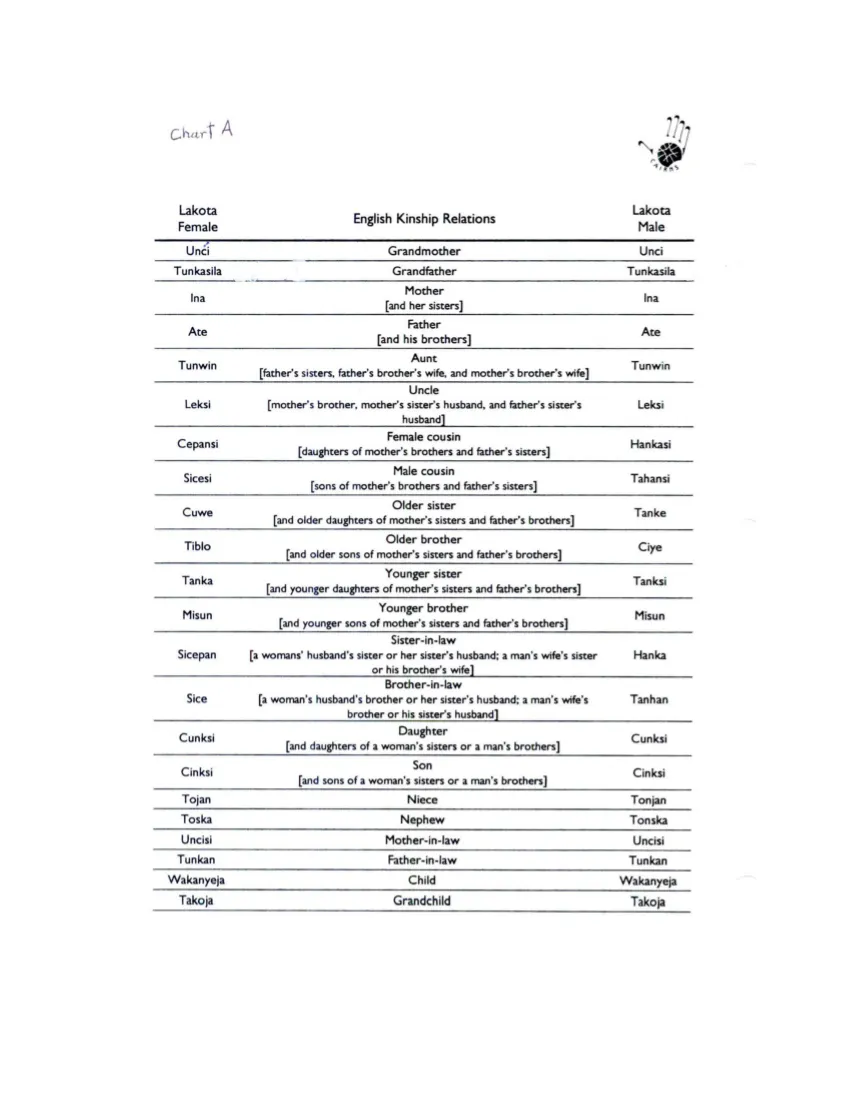
Learn kinship terms and sing That’s Me. Make a family constellation poster with names, labels, or photographs and share it with the class.
Featured sources
Use the complete source text, illustrations, worksheets, and matched Elder sources reproduced below. Named readings and external media are identified in the original text.
Summative performance task · Argument
Use the original lesson’s assessment criteria and culminating activity reproduced in the source text. A separate IDM argument prompt was not stated.
Extension
See the complete archived lesson for its original extensions, where provided.
Taking informed action
A separate informed-action task was not stated in the archived lesson.
Elder sources included in this lesson
No specific Elder video could be matched to the archived lesson’s source references.
Also named in the source: Gladys Hawk. A specific video was not identified for these references.
Original text & supporting materials
The complete archived text is retained here, including details that may extend beyond the inquiry blueprint.
Read the full archived lesson text
K-4 Lesson Plan
I am part of a family…
Oceti Sakowin Essential Understandings:
•
ESSENTIAL UNDERSTANDING 4 - The Oceti Sakowin kinship systems provide a framework for
both individual and group behavior. Its unwritten rules promote harmony, compromise, a sense
of order, and group cohesion.
o Indicator one: Analyze the importance of the Oceti Sakowin family structure and
extended family.
K-2: Students are able to identify examples of kinship terms
•
ESSENTIAL UNDERSTANDING 4 - The Oceti Sakowin kinship systems provide a framework for
both individual and group behavior. Its unwritten rules promote harmony, compromise, a sense
of order, and group cohesion.
o Indicator two: Analyze the Oceti Sakowin social etiquette, proper behavior and values.
Common Core State Standards:
•
RLK.10, RL1.10, RL2.10: Engage in texts of appropriate level and complexity.
•
Speaking and Listening Standards 1-3 for K-2 Students
Introduction:
•
What is a family? Watch the following video on “All Kinds of Families” by Mary Ann Hoberman.
The link is: http://www.poetryfoundation.org/features/video/191
•
For older students use the link to “We Are Family” from Ice Age at:
https://www.youtube.com/watch?v=mcW6tMPgmxI
•
Begin brainstorming a bit about family. Who is part of your family? How are you related? Make
a list on the board. Why are these relationships important? Show Gladys Hawk’s video on
family.
Lesson:
•
As we begin to talk about who is in our family, make a point about how each family is a little
different. There isn’t always a mom or a dad or a sister or brother. Sometimes there are other
people too like grandmas and grandpas, cousins, or aunties and uncles.
•
Let’s think about your family. Who lives with you? It can be people that live only sometimes
with you or all of the time with you.
•
There are different words for different members of your family. Go through the Lakota terms
for family members together.
•
Sing our family song, “That’s Me!” together.
•
Create family posters together with each student in the middle and all of the relatives around
them using labels and photos of the students. Have students name relatives as appropriate and
draw pictures.
•
End with “That’s Me” song again.
Possible Follow-Up Activities:
•
Have a day of sharing our families together by having each student share their posters.
•
Sing “That’s Me” for a community gathering.
Original page 1 · illustrations and source materialsOriginal page 3 · illustrations and source materials